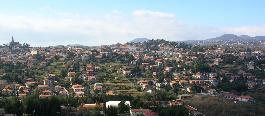
Trecastagni lies on the southeastern slopes of Mount Etna in eastern Sicily, positioned in a landscape shaped by volcanic activity, fertile soil, and gradual elevation. The town sits at a midpoint between sea and summit, where the presence of the volcano is constant but not overwhelming—visible, influential, and integrated into daily life.
The settlement is relatively compact, organized around small squares and a network of streets that follow the gentle incline of the terrain. Buildings are often constructed from local lava stone, giving parts of the town a darker, textured appearance that contrasts with lighter plastered façades. This material connection to Etna reinforces a sense of place grounded in geology.
At the center stands the Basilica di San Nicola, a focal point for both architecture and community life. Around it, the town maintains a steady, local rhythm, with cafés, shops, and residential spaces blending into a cohesive, lived-in environment rather than a touristic one.
The surrounding countryside is one of Trecastagni’s defining features. Vineyards, orchards, and cultivated fields extend outward across volcanic soil, benefiting from the mineral richness of the land. Stone walls, often made from hardened lava, divide plots and trace the history of agricultural use over time.
As elevation increases beyond the town, the landscape becomes more rugged and sparse, transitioning into the upper slopes of Etna where vegetation thins and the terrain shows more direct signs of volcanic activity—black lava fields, ash-covered ground, and shifting formations.
What defines Trecastagni is its balance between stability and underlying force: a settled, agricultural town existing in the shadow of an active volcano. The environment feels calm and productive, yet always connected to a larger geological system that shapes the land, the architecture, and the identity of the place. |
| Add Review [Reviews Guidelines] |
| Only registered Holiday members may write reviews. Register. |



 Greek
Greek  English