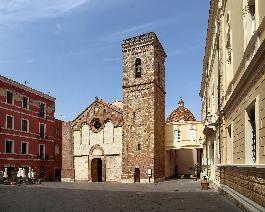
Iglesias lies in southwestern Sardinia, slightly inland from the coast, set within a landscape shaped by hills, forests, and a long history of mining. The town is surrounded by the rugged terrain of the Sulcis-Iglesiente region, where mineral-rich ground has influenced both its economy and identity for centuries.
The historic center is compact and enclosed, with narrow streets, small squares, and stone buildings that reflect medieval origins. At its core stands the Cathedral of Santa Chiara, a simple yet prominent structure that anchors the town’s main piazza. The overall atmosphere is quieter and more inward-looking than coastal Sardinian towns, with a focus on local life rather than tourism.
Iglesias developed significantly during the medieval period under Pisan influence, and traces of this era remain visible in the town’s layout and fortifications. The surrounding hills once hosted extensive mining operations, and remnants of this industrial past—shafts, structures, and abandoned sites—are scattered across the landscape, giving the area a layered, sometimes austere character.
Beyond the town, the terrain becomes more varied and open. Forested areas and rocky hills transition toward the coast, where dramatic cliffs and less-developed beaches contrast with the more populated parts of the island. This proximity allows Iglesias to function as a gateway between inland Sardinia and its southwestern shoreline.
The pace of life is steady and grounded, shaped more by local rhythms than by seasonal influx. Markets, small shops, and everyday routines dominate the center, reinforcing a sense of continuity with its past.
What defines Iglesias is its depth rather than its immediacy: a place where history is embedded in the land itself, where industry and nature intersect, and where the surrounding terrain plays as significant a role in its identity as the town’s streets and buildings. |
| Add Review [Reviews Guidelines] |
| Only registered Holiday members may write reviews. Register. |



 Greek
Greek  English